.svg.png)
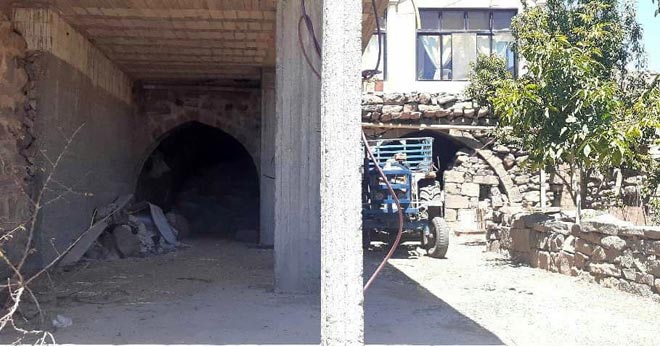

Despite the passage of centuries, the Salkhad Caravanserai has preserved its core architectural character. The site has undergone targeted conservation interventions to safeguard its structural and historical integrity. The main façade is constructed from black basalt stone, a material distinctive to the architectural heritage of southern Syria. The entrance features a large wooden gate crowned with an ornamented stone arch.
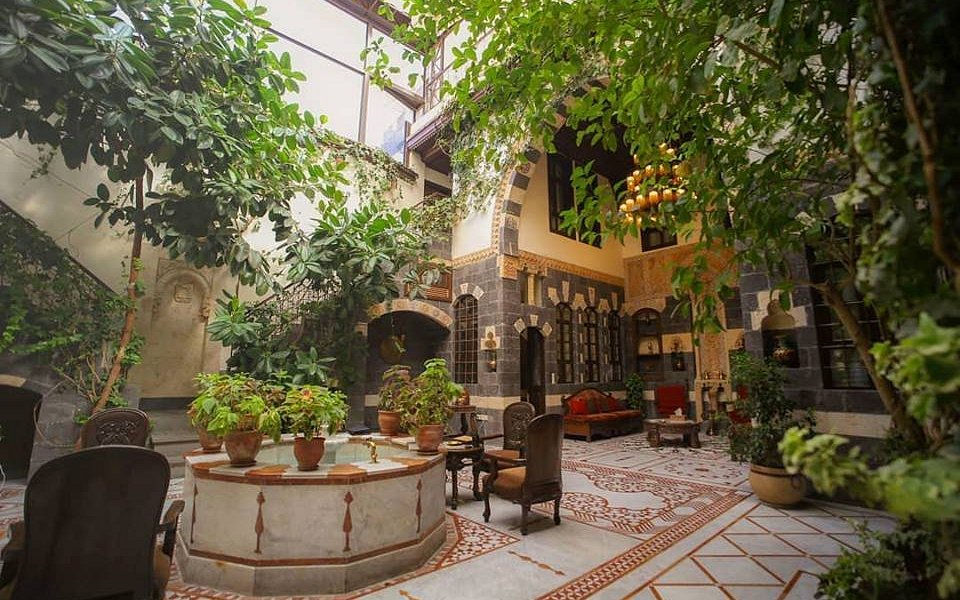
At the heart of the structure lies a spacious central courtyard, with a stone water basin that once served as a watering place for pack animals. The courtyard is surrounded by multiple rooms, historically used as storerooms and sleeping quarters for travelers and merchants.
Architectural decorations are restrained, with modest stone carvings adorning the arches and windows—subtle references to the aesthetic traditions of the period.
Salkhad Caravanserai is one of the key historical landmarks in As-Suwayda Governorate. It is located in the city of Salkhad, one of the oldest continuously inhabited cities in the region. Although it was constructed in the 18th century during the Ottoman period, its architectural essence reflects deeper regional traditions, possibly influenced by earlier Ayyubid foundations. The caravanserai served as both a rest station and a commercial hub for traders passing through the area.
Today, Salkhad Caravanserai stands as a living testimony to the region’s commercial vitality and architectural legacy, underlining the historic role of As-Suwayda as a crossroads of trade and culture throughout past centuries.