.svg.png)
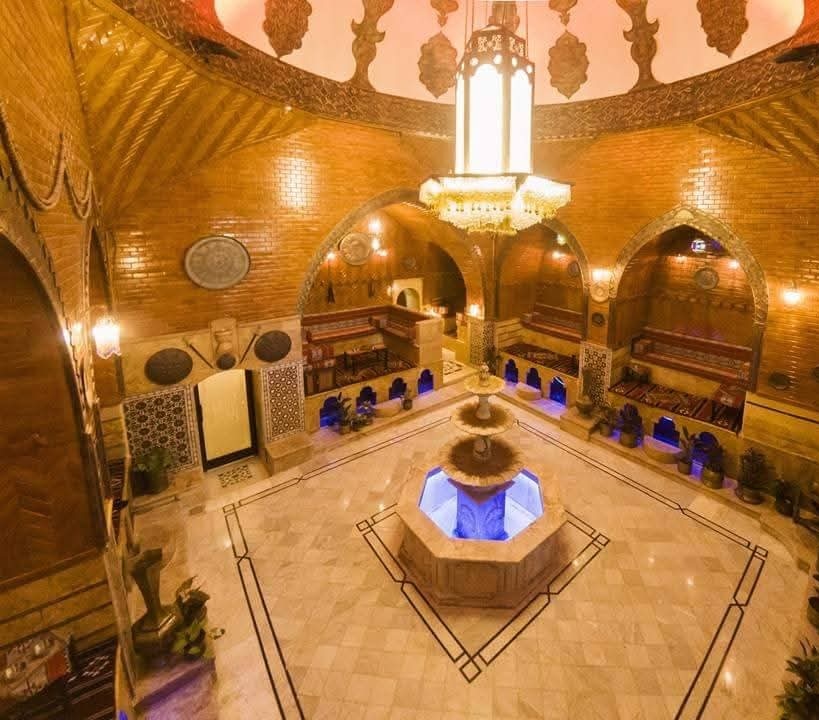
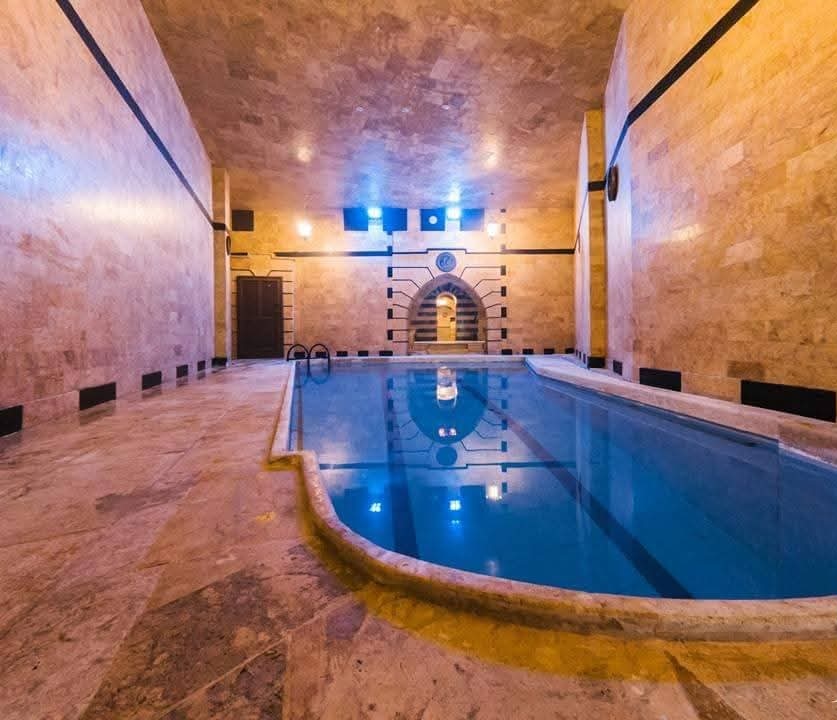
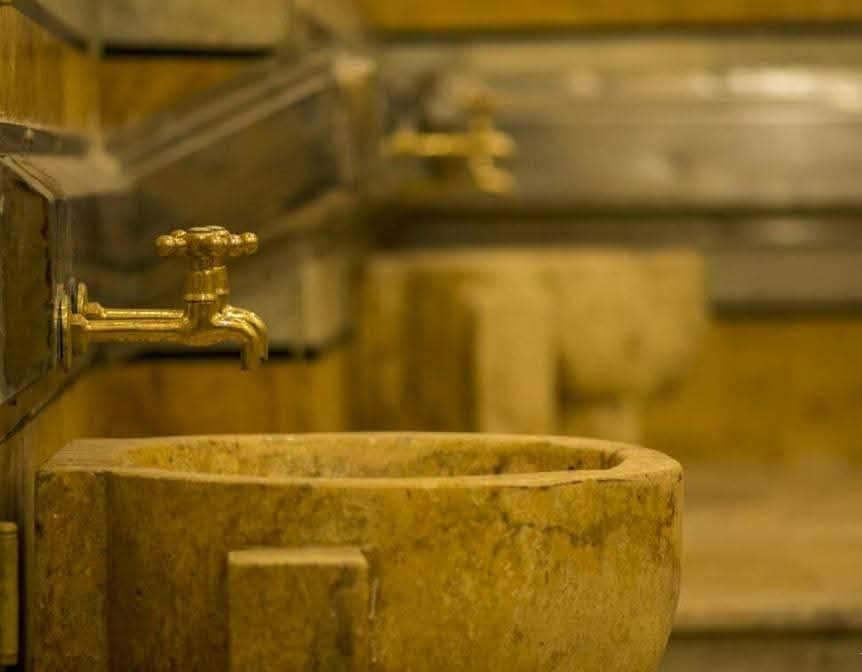
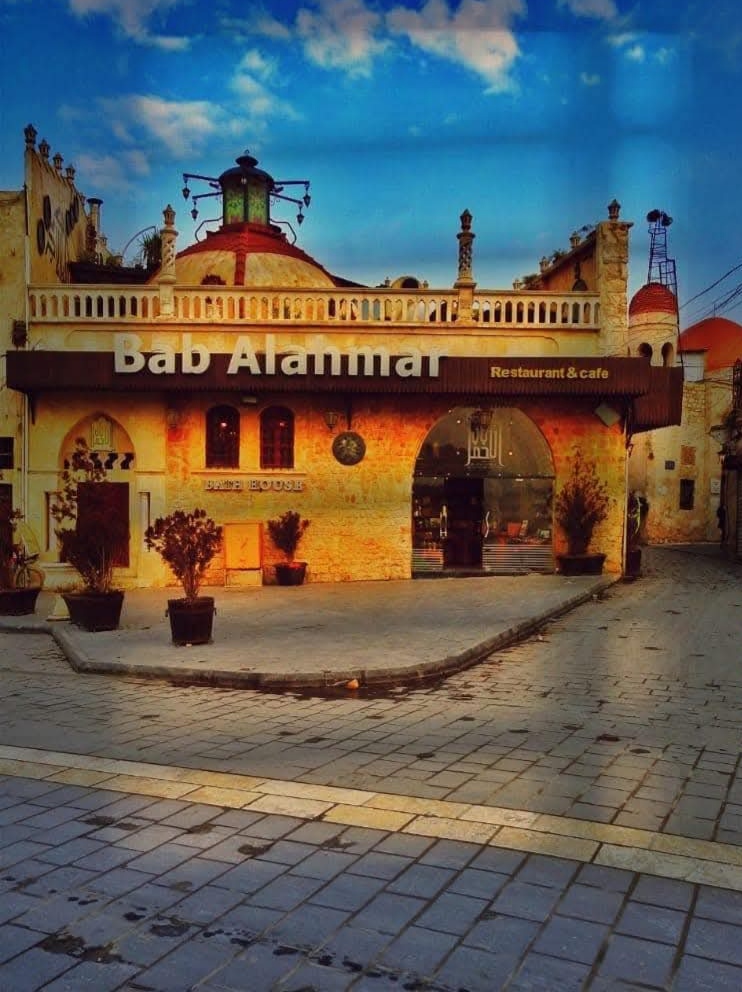
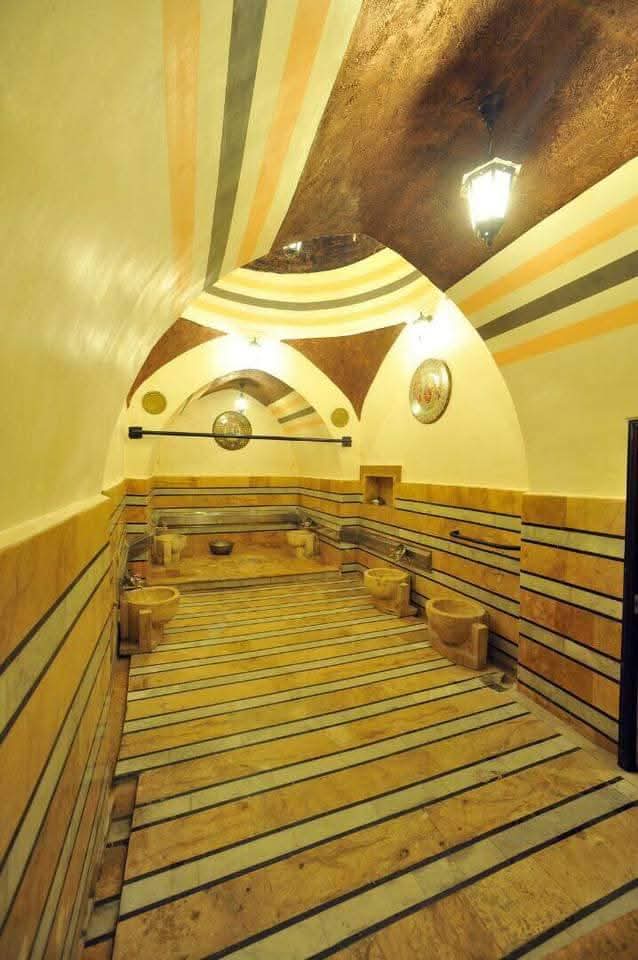
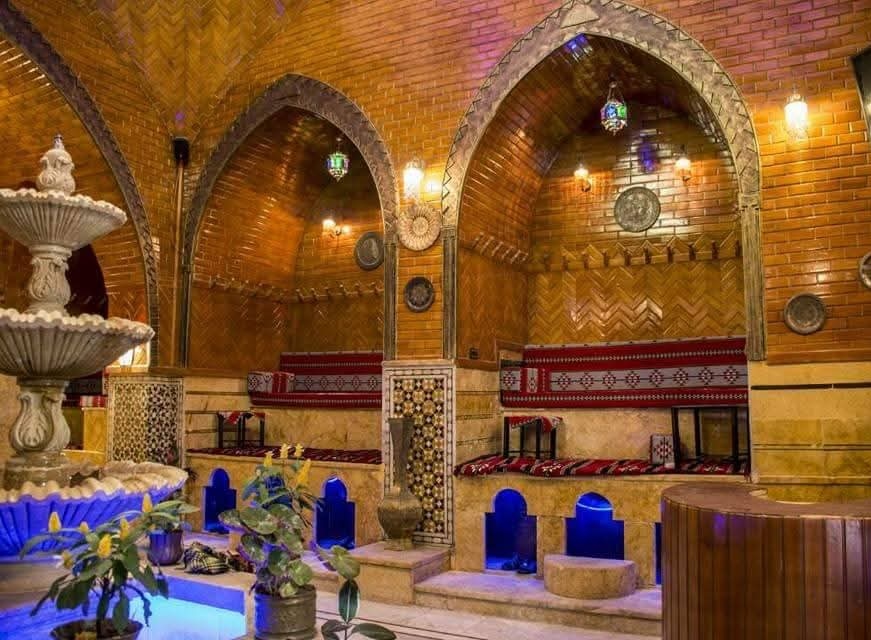
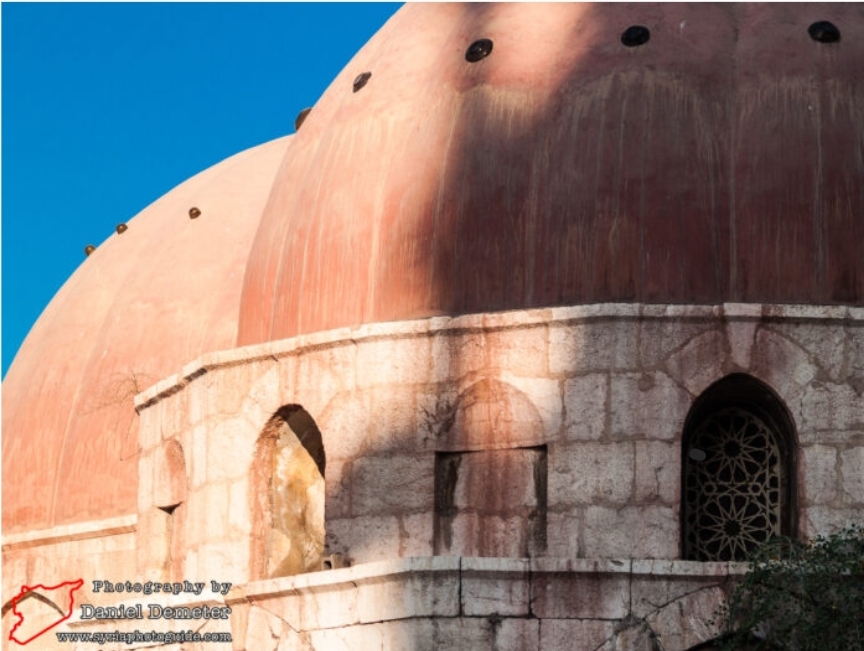
Hammam Bab Al-Ahmar was built during the Mamluk era in the fifteenth century, making it more than 537 years old. Its distinct dome, however, dates back to the Ottoman period. Hammam served the district of orchards outside the city walls, built from pink stone to harmonize with the color of the neighborhood gate. The outer dome is adorned with a network of seventy-two stars, casting patterned beams through the steam. The well water is rich in light sulfur, which led to the Hammam being associated with the treatment of rheumatism, as documented in the Aleppine manuscript Manaf‘ al-Badan from 1711. The Hammam closed during the war but was reopened in 2020 after restoration efforts, including wooden clogs renovation and marble flooring embedded with Italian pebbles for foot massage. Now it offers rose-scented sessions, where oils are simmered in copper basins. A visual application explains the water cycle, tracing its journey from the well to the copper boiler and through the basins, comparing the traditional consumption of energy with modern electric heaters. Historically, the Hammam also hosted social rituals linked to weddings and childbirth, where brides or new mothers would visit accompanied by relatives and friends to celebrate and participate in traditional customs.