.svg.png)

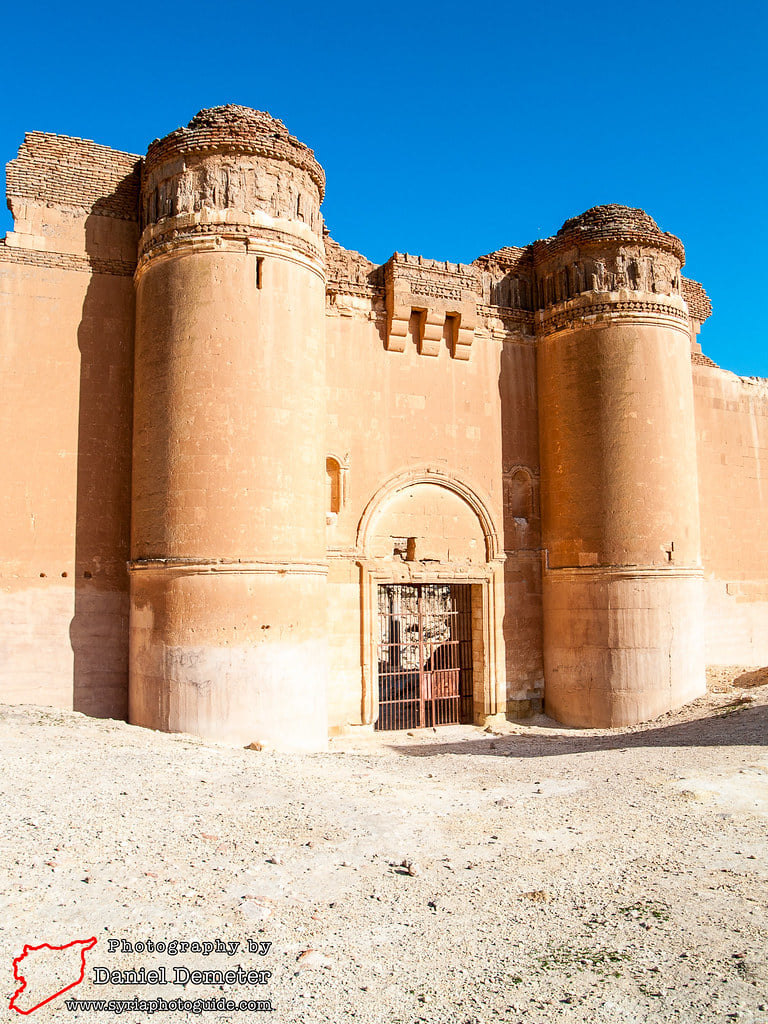
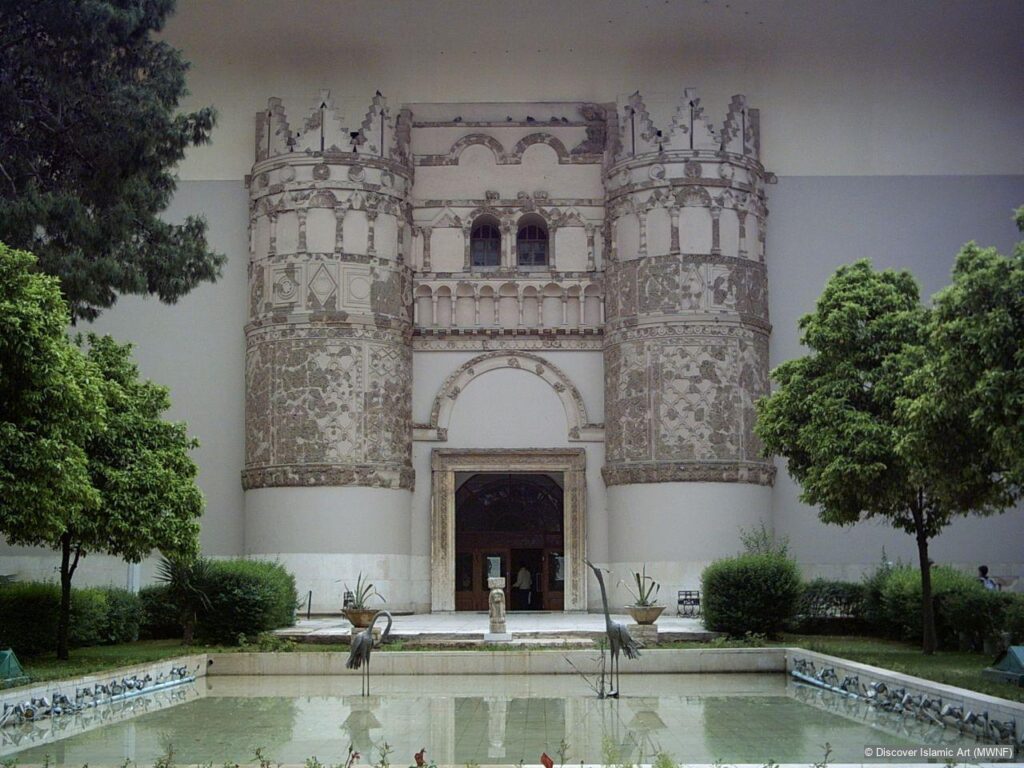
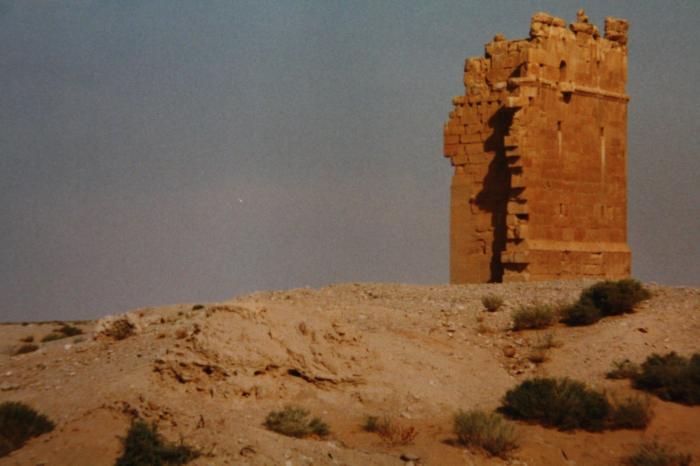
The Qasr al-Hayr al-Gharbi rises on the outskirts of the Syrian desert, about 80 km southwest of Palmyra, as a masterpiece of Umayyad architecture. It was built by Caliph Hisham ibn Abd al-Malik in 727 CE to transform the desert into a desert paradise. The complex consists of a square residential palace centered around an octagonal courtyard, a bathhouse with suspended domes on plaster muqarnas, a caravansary for travelers, a dam, an artificial lake, and a walled garden irrigated by a sloping underground channel (fijj channel). Syrian-German excavations (2007-2010) uncovered geometric mosaic tiles with the signature of a workshop in Byzantium, proving the artistic exchange between Damascus and Constantinople.