.svg.png)
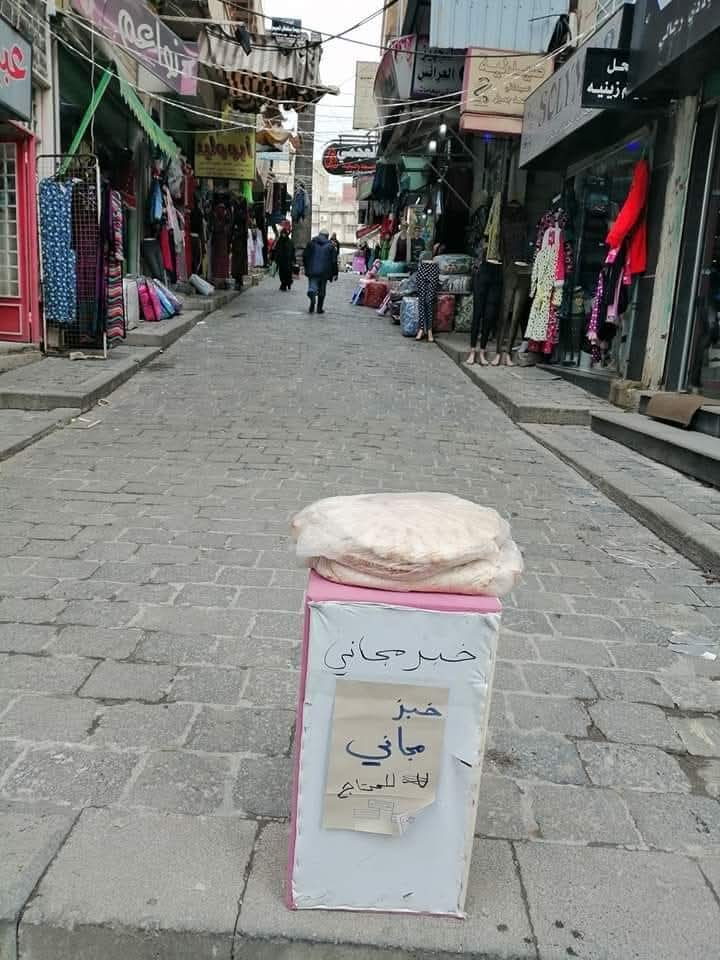
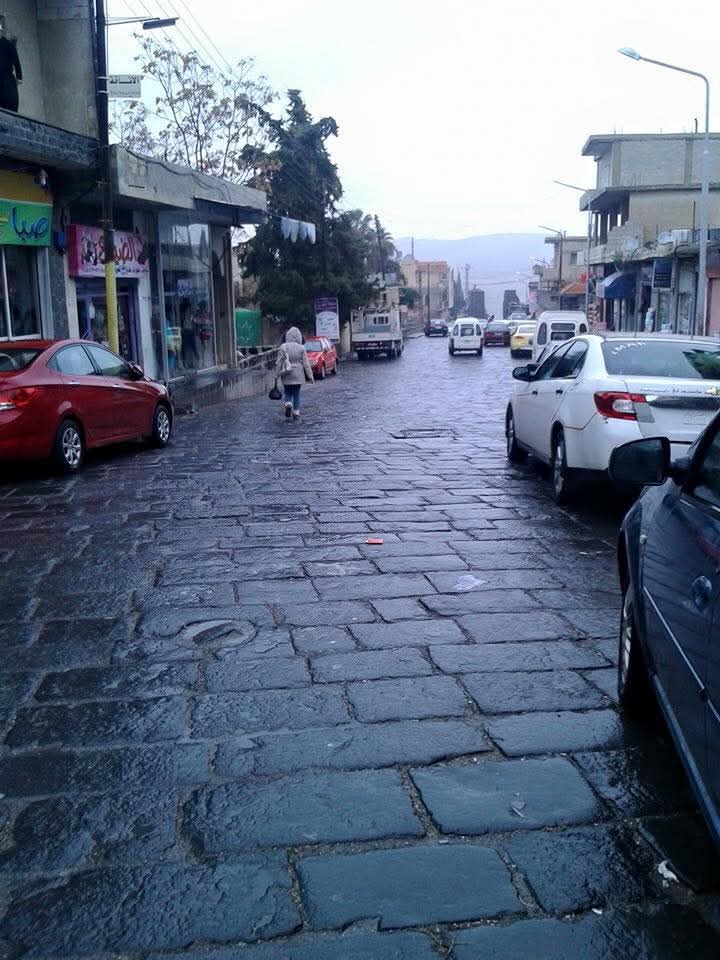
One of the most prominent historical commercial landmarks that has formed an essential part of the city’s memory and daily life. The market doesn’t bear this name for nothing; rather, it derives from the fact that its floor is paved with carved basalt stone tiles, distinguishing it from other nearby markets and giving it a unique architectural character that remains present in the visual memory of the city’s residents.
The Souk al-Balat was a meeting place for the city’s and its countryside’s merchants, a daily meeting place for buying and selling, exchanging news, and building social relationships. Its tightly packed shops, with their stone arches and wooden ceilings, hosted a variety of commercial activities, from selling food and spices to fabrics and daily necessities, making it a vibrant artery of Sweida’s economic life for many years.
Perhaps what distinguishes this market, in addition to its architectural beauty, is the people’s feelings toward it; it is not just a place of trade, but a living space of memory. Passersby knew the market’s merchants by name, and every corner held a story: a shop inherited by a son from his father, a corner where women used to stand to chat, and a vendor who would place his chair by the door to drink coffee with customers.
But today, with lifestyle changes and the transformation of the city center, activity in the market has declined, and some of its shops have closed or changed their use. Nevertheless, the market persists, with its stones and charm, awaiting someone to restore it to life, who sees it as more than just a stone walkway, but rather a living heritage that must be preserved.
Documenting Souk al-Balat is documenting a city that knew how to walk to the rhythm of the tiles, with calm and elegance. It is a call to revive the places whose walls still bear the echo of the footsteps of the people who passed by, and their longing for life despite everything.