.svg.png)
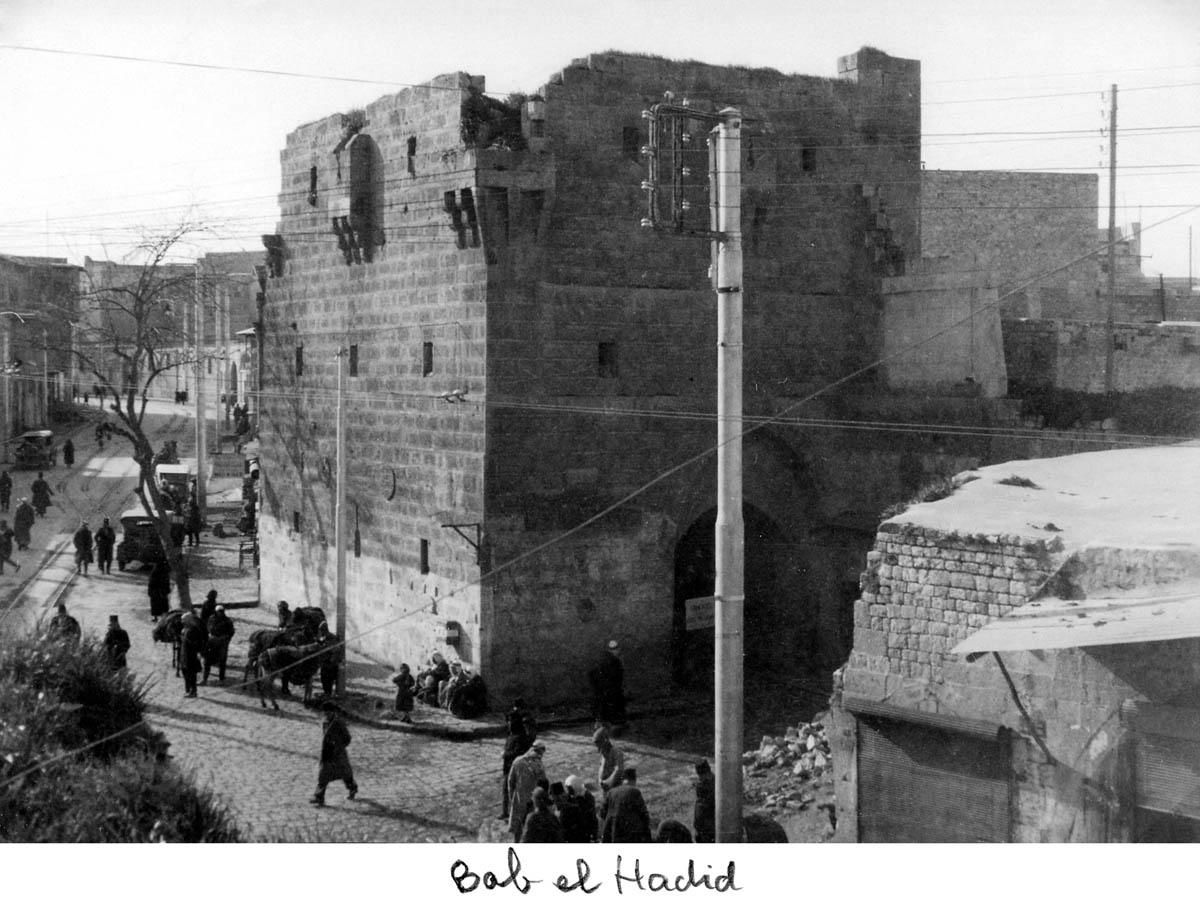
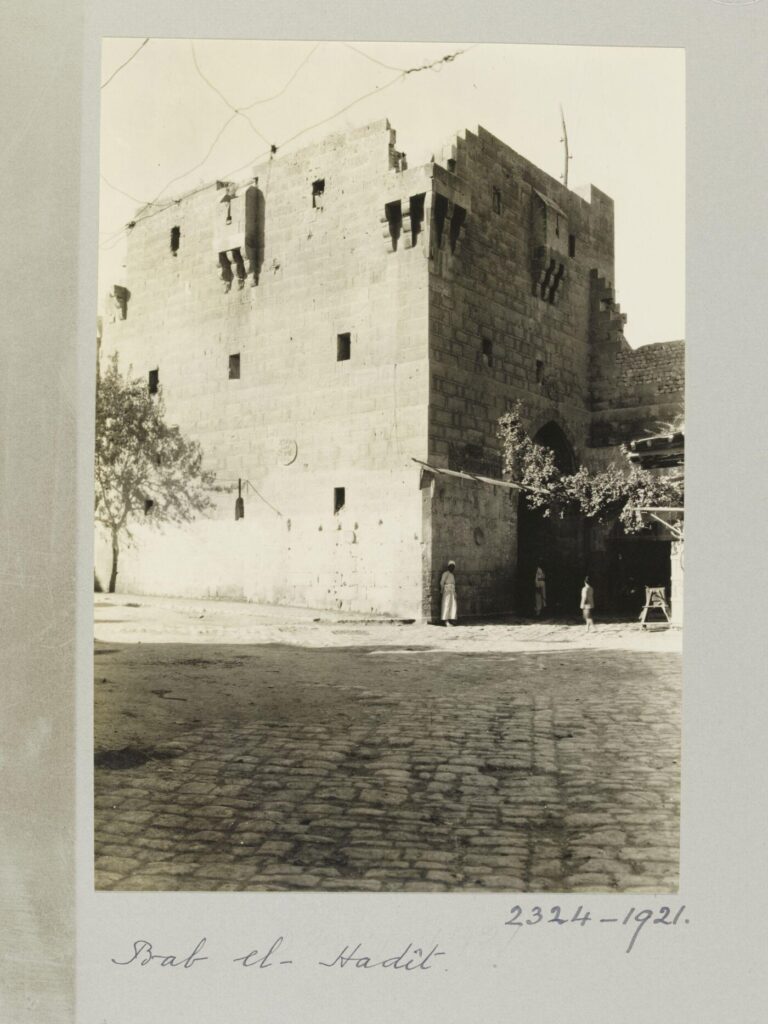
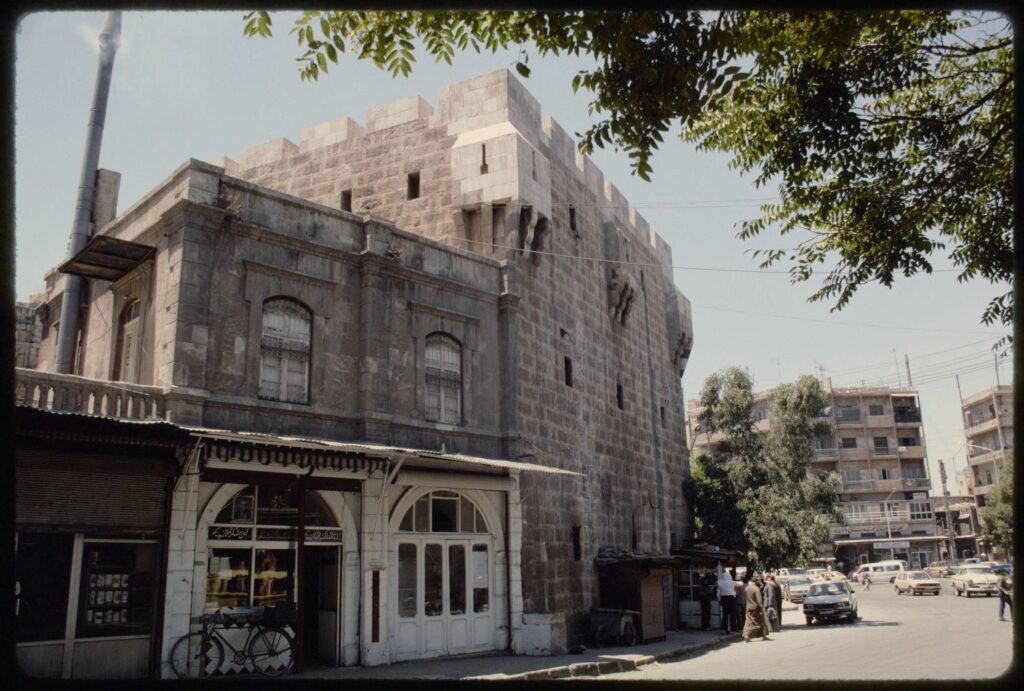
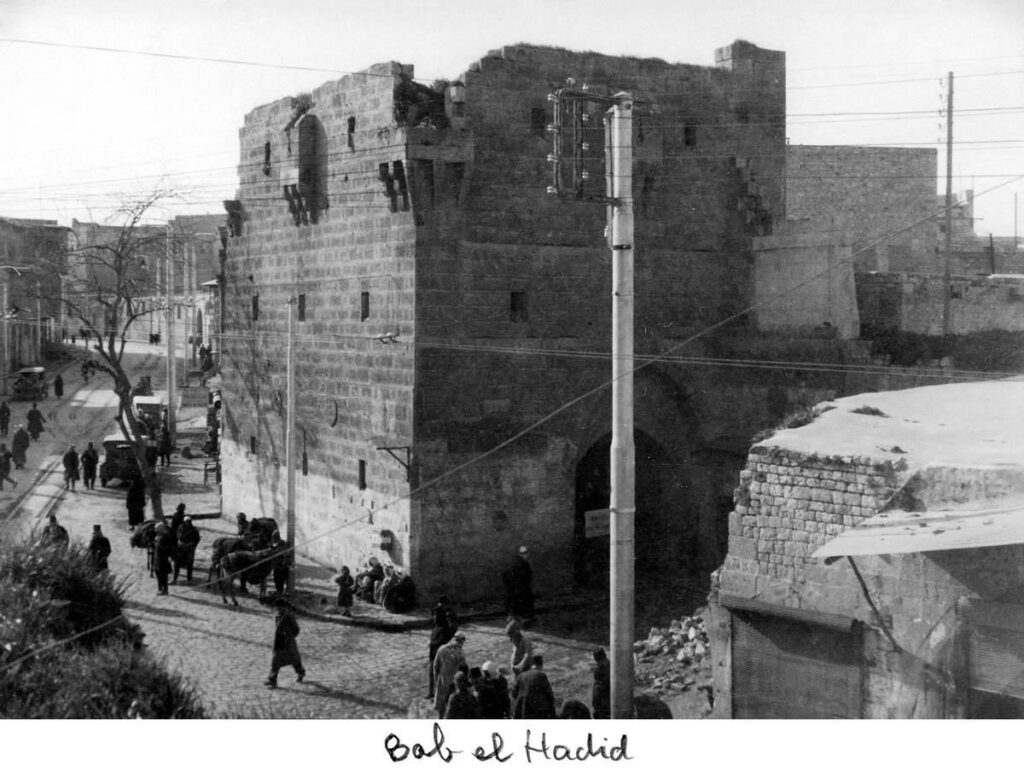
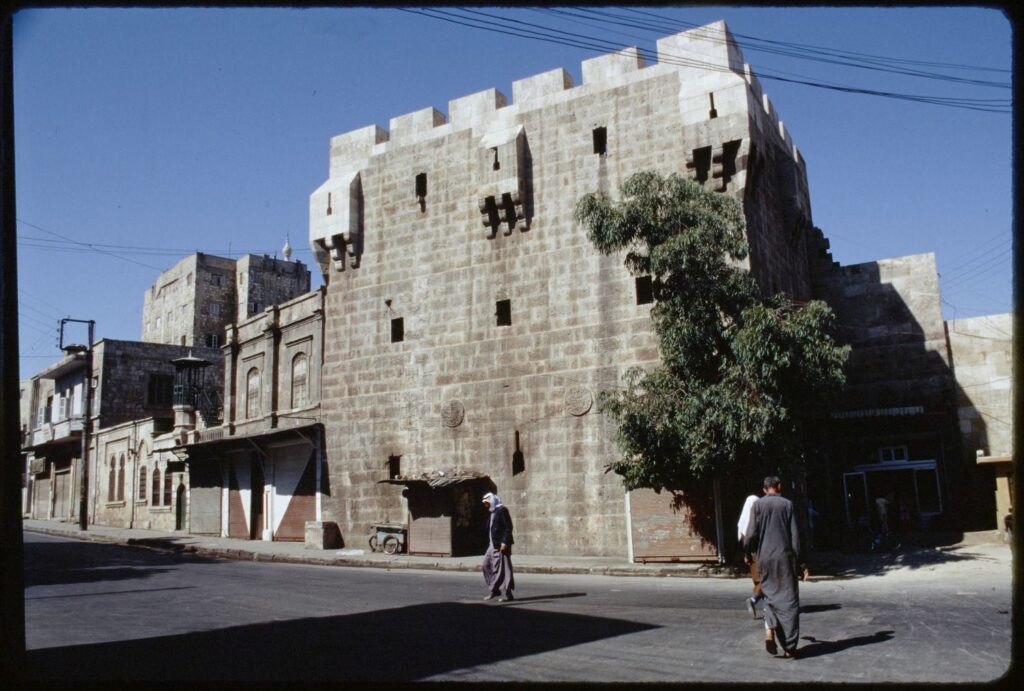
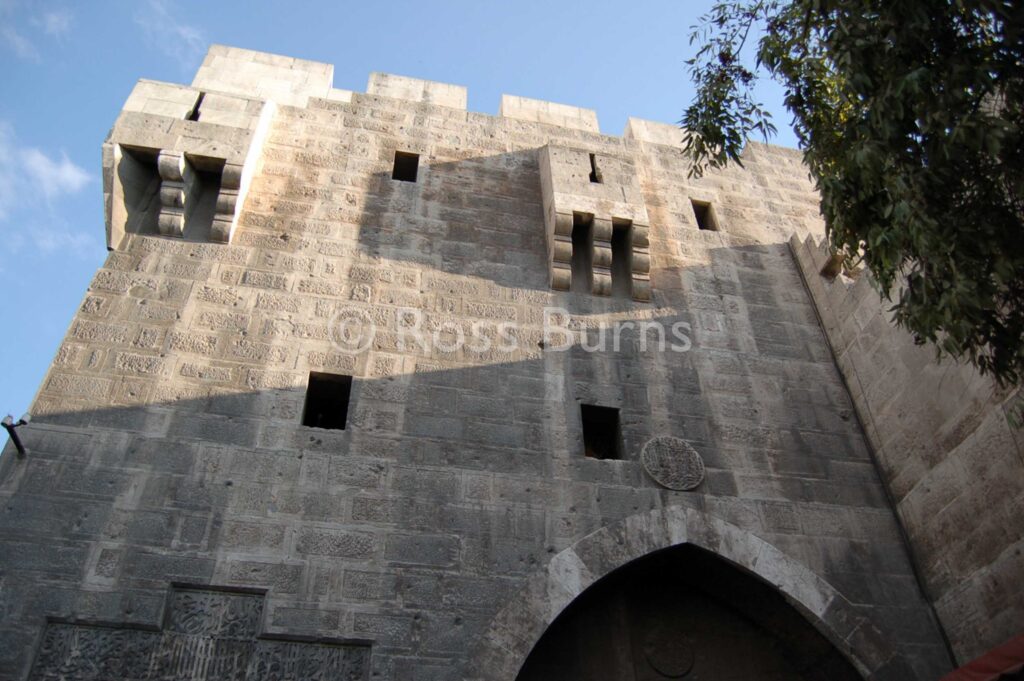
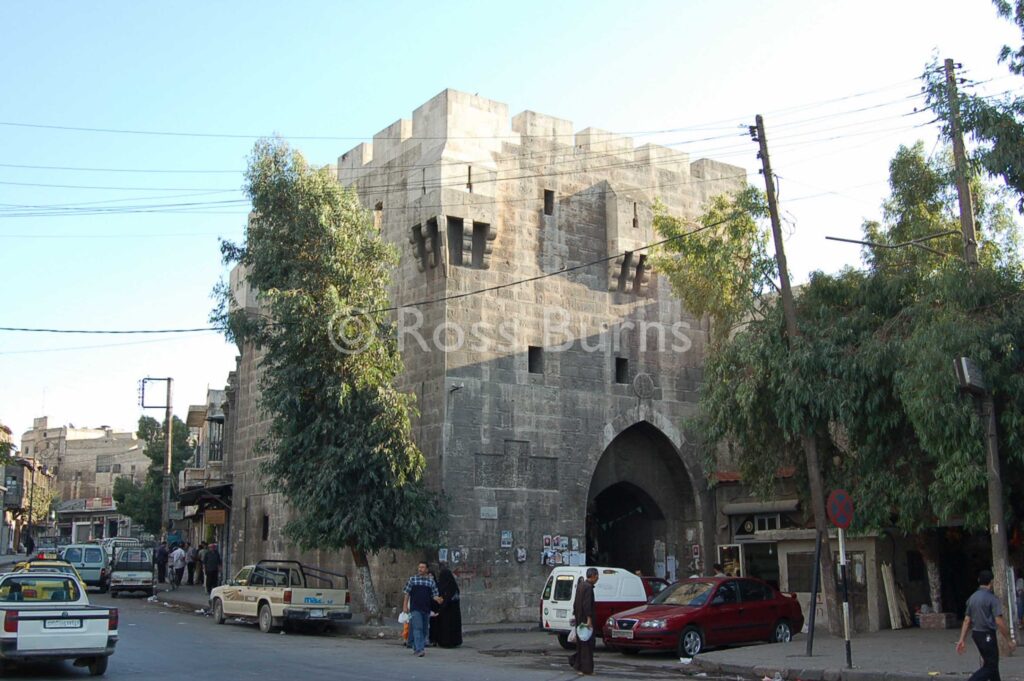
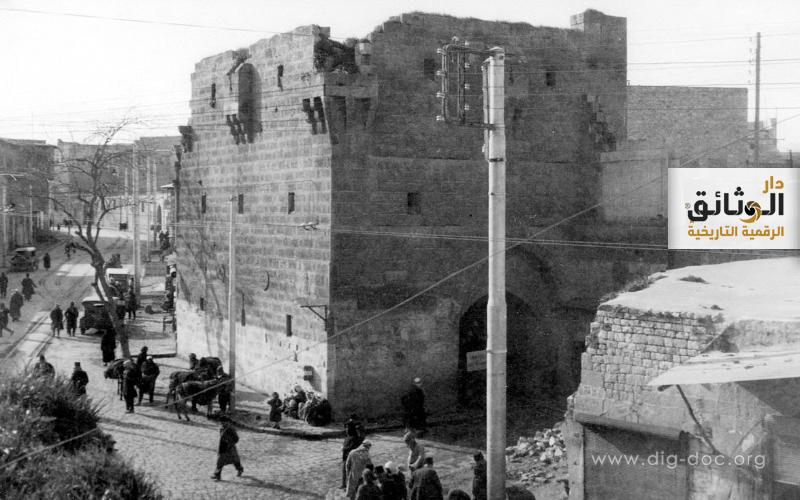
Bab al-Hadid (Iron Gate)
Gate
1212 AD
A Mamluk entrance connecting the blacksmiths’ district to the city.
Original iron door leaf, pointed arch, rectangular towers
Originally called “Bab al-Qanat” (Gate of the Canal) because the canal from Hailan—brought to Aleppo by Sultan al-Zahir Ghazi—entered the city through this gate. It was also known as “Bab Banqusa”, as it led to the Banqusa neighborhood located on the eastern and northern outskirts of Aleppo. Today, it is called “Bab al-Hadid” (Iron Gate) because the shops nearby were historically used for blacksmithing—and to this day, blacksmiths still work close to the gate.
This gate is located in the northeastern corner of Aleppo’s old city wall and dates back to the Mamluk period during the city’s fortification transition. It was renovated and fortified in its current form by Sultan Qansuh al-Ghuri. The structure comprises two gates with a guardroom (darkah) in between, topped by a strong fortress. The Directorate of Antiquities has restored the gate and its tower, converting part of it into a guest house for official visitors.
This gate connects large northeastern suburbs with the city center, passing through residential areas and active zones east of the Citadel. It also links Aleppo to rural and desert regions to the east via its outskirts. Its location made it a key entry point for caravans arriving from the Euphrates, Iraq, Persia, and the Far East, thus making the surrounding markets crucial for receiving, exchanging, and importing goods into the city. Customs officers were once stationed here before the Ottoman administration relocated them to designated areas within the central markets.
An inscription above the gate attributes its construction to Sultan Qansuh al-Ghuri in 1509 AD, reading:victorious Citadel of strengthen his supporters, in the year 915 AH (1509 AD).”
The gate also bears royal emblems (ranuq) of Sultan Qansuh al-Ghuri.