.svg.png)

Preserved
Monastery of Mar Musa al-Habashi
The Monastery of Mar Musa is located at an altitude of 1320 meters above the arid Nabk Valley, serving as a living canvas of desert monasticism. Built in the 6th
The Monastery of Mar Musa is located at an altitude of 1320 meters above the arid Nabk Valley, serving as a living canvas of desert monasticism. Built in the 6th

The Monastery of Mar Georges is perched on a rocky outcrop overlooking the Valley of the Christians and is considered one of the oldest Christian pilgrimage sites in Homs. Syriac

Tell Qadesh, also known as Tell Nabi Mend, is located southwest of Homs, rising 28 meters above the Orontes plain. It was the center of the Hittite kingdom of “Qadesh,”

The Temple of Allat was completed in the 2nd century BCE within a walled sanctuary guarded by statues of Canaanite lions. The most famous is the “Lion of Allat,” at

This temple, built in the early 1st century CE, is dedicated to Nabu, the Mesopotamian god of wisdom and writing, revealing the intellectual connections between Palmyra and Mesopotamia. It was

The Monumental Arch, widely known as the “Arch of Triumph,” stands at the middle of the Colonnaded Street, marking the transition for visitors from the temple quarter to the market
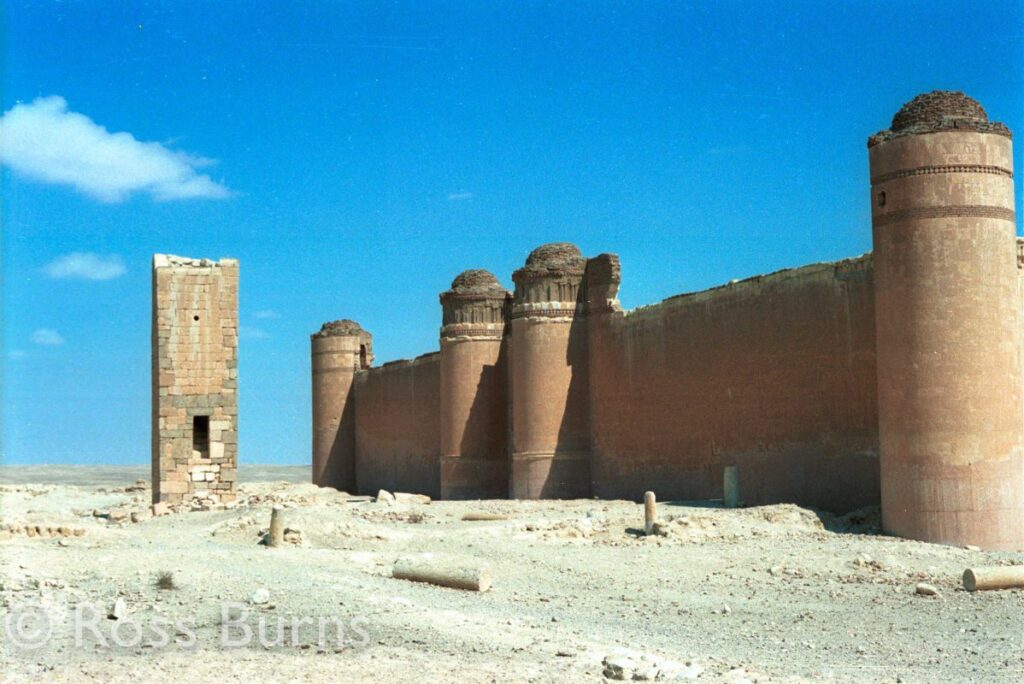
The Qasr al-Hayr al-Sharqi is located 120 km northeast of Palmyra and has been placed on the UNESCO Tentative List (file 1298). Built in 728 CE during the reign of

The Qasr al-Hayr al-Gharbi rises on the outskirts of the Syrian desert, about 80 km southwest of Palmyra, as a masterpiece of Umayyad architecture. It was built by Caliph Hisham

The Valley of Tombs, located west of the walls of Palmyra, contains about 200 funerary towers built between 50 BCE and 128 CE as part of royal burial rituals that